 TalkChinese AI
Travel Chinese
Chinese for travelers, for the moments that actually happen.
Your first days in China are full of small conversations: a driver calling, a cashier asking how you will pay, or a restaurant worker confirming your order. Start with the phrases that keep those moments moving.
Practice this travel chinese conversation in the app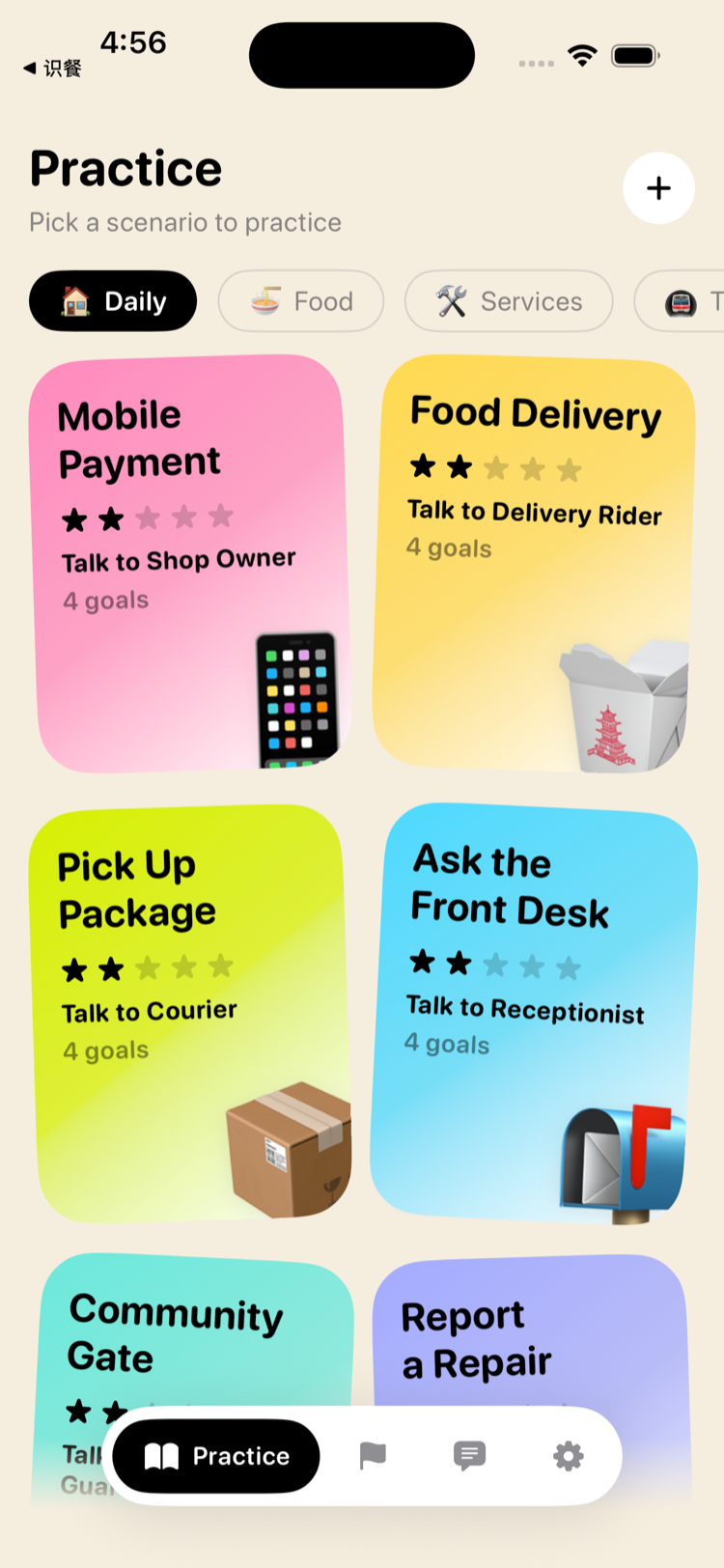
Words to use when this really happens
Start politely
你好 (nǐ hǎo) means hello. 麻烦你了 (má fan nǐ le) is a useful, polite way to say “sorry to trouble you” before asking for help.
Make yourself understood
请问 (qǐng wèn) means “may I ask.” Use it before a question: 请问,地铁站怎么走?(qǐng wèn, dì tiě zhàn zěn me zǒu?) — “How do I get to the subway station?”
Keep the conversation going
When you do not understand, say 请再说一遍 (qǐng zài shuō yí biàn) — “Please say that again.” It is one of the most useful phrases to learn first.
Turn phrases into replies
Practice the travel chinese moment before you are in it.
In TalkChinese AI, you respond out loud, hear a natural follow-up, and try again. That is how a phrase becomes something you can actually say.
- Practice this turnStart politely
- Practice this turnMake yourself understood
- Practice this turnKeep the conversation going
请再说一遍
qǐng zài shuō yí biàn — “Please say that again.” One reliable sentence gives you room to listen, think, and keep going.
Questions people ask
Do I need to learn Chinese before visiting China?
No. A small set of phrases for food, transport, payments, and asking for help makes a meaningful difference.
What is the best way to practice travel Chinese?
Practice complete situations aloud. TalkChinese AI lets you rehearse practical conversations before you need them.
Ready to say it, not just read it?
Download TalkChinese AI and rehearse this exact type of conversation out loud before you need it.
Practice travel chinese in the app